

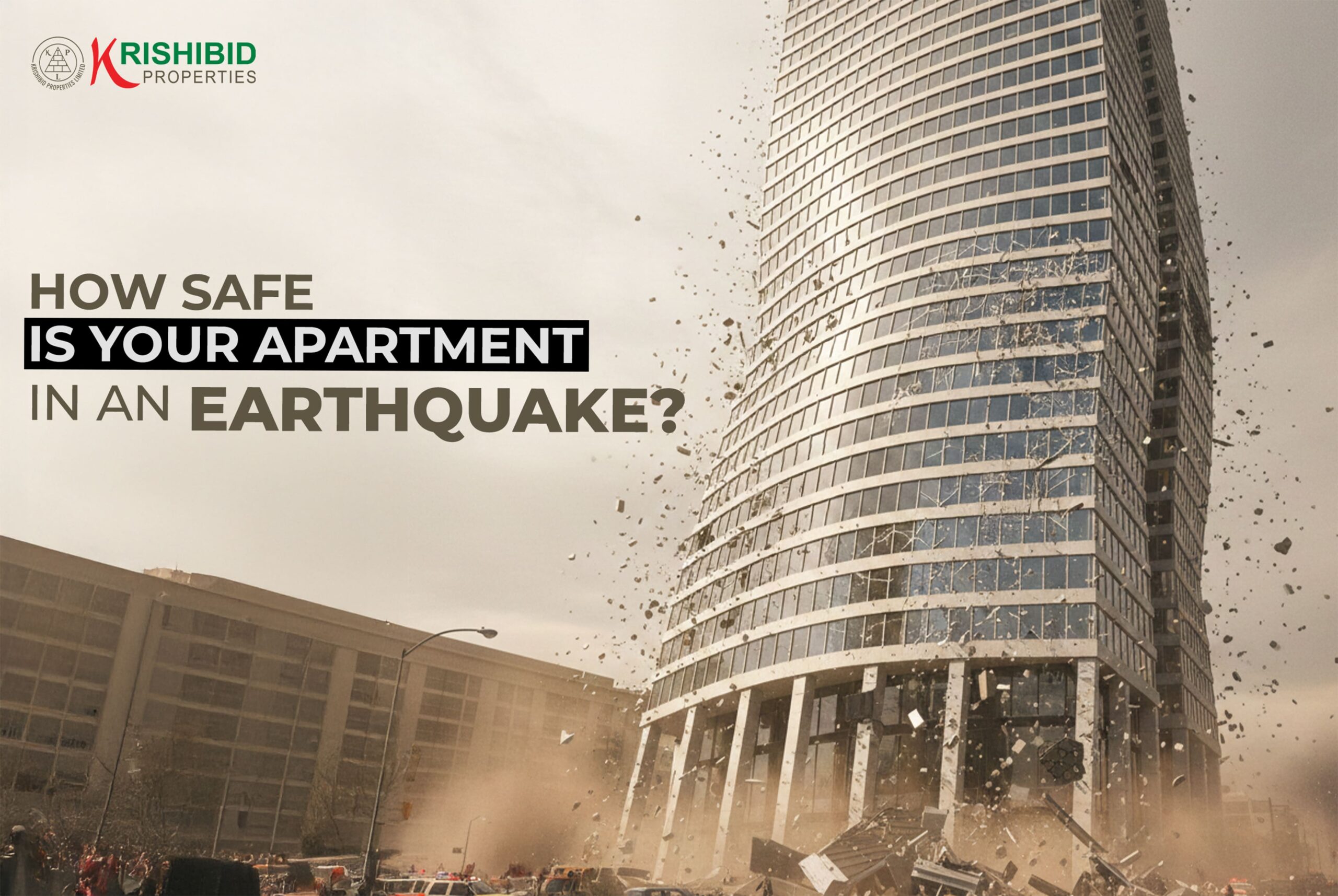
In an age where we can tour an apartment via virtual reality and check its proximity to the nearest coffee shop with a single click, one critical question often remains unasked: Will this building stand when the ground starts to shake?
Earthquakes are “silent” disasters—they don’t give the warning of a gathering storm or a rising river. For those booking a long-term rental or buying an apartment in 2026, seismic safety is no longer a luxury; it is a fundamental survival metric.
1. The Japan Blueprint: Architecture That “Dances”
When it comes to seismic resilience, Japan is the undisputed world leader. Following the devastating Great Kanto Earthquake of 1923, the nation transformed its building philosophy from rigid resistance to intelligent flexibility.
The Legislative Turning Point
Japan’s safety isn’t accidental; it’s mandated. The Building Standard Act was overhauled in 1981 (creating the Shin-Taishin or “New Anti-Seismic” standard). This law ensures that any building constructed after June 1981 is designed not just to stay standing during a moderate quake, but to prevent collapse during a massive, once-in-a-century event.
The Three Pillars of Japanese Engineering
Japanese real estate identifies three specific levels of earthquake technology:
-
Taishin (Seismic Resistance): The basic level. Walls and columns are reinforced to ensure the building doesn’t collapse.
-
Seishin (Seismic Damping): The building contains “shock absorbers” (dampers) that soak up seismic energy, reducing the sway by up to 30%.
-
Menshin (Base Isolation): The “Gold Standard.” The building sits on lead-and-rubber bearings, effectively “decoupling” it from the ground. When the earth shakes, the building glides, reducing the impact by up to 80%.
The Lesson for Travelers: In Japan, earthquake safety ratings are often publicly disclosed. If you are booking a high-rise in Tokyo, looking for the word “Menshin” in the building description is the ultimate peace of mind.
2. The Bangladesh Context: A High-Stakes Reality
While Japan is prepared, Bangladesh sits on a “seismic time bomb.” Geologically located at the junction of three tectonic plates (Indian, Eurasian, and Burmese), the region has entered what experts call a “seismic gap”—a long period of silence that historically precedes a major event.
The Challenge of Urbanization
In cities like Dhaka, Chattogram, and Sylhet, the real estate boom has often outpaced safety enforcement. The primary risks in Bangladesh are:
-
Soft-Story Collapse: Many apartments have open ground floors for parking, supported only by thin pillars. Without proper “shear walls,” these can fold like a deck of cards.
-
Soil Liquefaction: Much of Dhaka is built on filled-in wetlands. During a quake, this soil can turn to “liquid,” causing even well-built structures to tilt or sink.
-
The Enforcement Gap: While the Bangladesh National Building Code (BNBC) 2020 is world-class on paper, the actual implementation at construction sites remains inconsistent.
3. How the Bangladeshi Real Estate Industry Can Take Initiative
For the Bangladeshi real estate sector to reach global standards, the shift must move from “Aesthetic Appeal” to “Structural Integrity.” As we move through 2026, here is how the industry can lead the way:
Mandatory Seismic Certification
Real estate developers should provide a “Seismic Safety Certificate” for every project. Just as an appliance has an energy rating, a building should have a seismic grade based on its adherence to BNBC 2020. This transparency would allow buyers to make informed decisions and force “corner-cutting” developers out of the market.
Transparency in Soil Testing
Developers must go beyond basic “piling.” They should provide potential buyers with Sub-soil Investigation Reports. If a building is being constructed on “liquefiable” soil, the developer should demonstrate the specific engineering solutions used (such as deep-seated piling or soil stabilization) to mitigate that risk.
Retrofitting the Existing Stock
The industry shouldn’t just focus on new builds. There is a massive market for seismic retrofitting. By partnering with organizations like JICA (who have already assisted PWD in public building retrofits), private developers can offer “safety upgrades” for older buildings, significantly increasing the value of the property while saving lives.
Moving Toward “Base Isolation”
While expensive, the introduction of Base Isolation technology in premium luxury apartments in Gulshan or Banani could set a new benchmark. By marketing “Earthquake-Proof Living,” developers can cater to a high-end demographic that prioritizes safety over Italian marble or smart home gadgets.
4. Know Before You Book: The 5-Point Safety Checklist
Whether you are booking a short-stay Airbnb or signing a long-term lease, use this checklist to gauge your risk:
1. The “Age” Factor
In Japan, look for buildings constructed after 1981. In Bangladesh, buildings approved after the implementation of BNBC 2020 are generally designed with much higher seismic coefficients than those from the 1990s.
2. Check for “Soft Stories”
Does the building have a wide-open ground floor for parking with no solid walls? If so, ask the owner if “shear walls” or “bracing” were added to the design. A building that looks like it’s “standing on stilts” is a high-risk structure in an earthquake.
3. Ask About the Soil
Ask the host or developer: “Was this land originally a wetland or a filled-in pond?” If the answer is yes, ensure the building has deep-foundation piling. Buildings on solid “red clay” (like in parts of Mirpur or Uttara) generally perform better than those on loose sand.
4. Observe the Neighboring Buildings
In dense cities like Dhaka, “pounding” is a major risk. If two buildings are built side-by-side with no gap, they will hit each other during a quake. Look for at least a few inches of separation (seismic gap) between structures.
5. Fire Safety and Exits
Earthquakes often lead to fires due to broken gas lines. Check if the apartment has:
-
A clear, unblocked emergency staircase (not just the elevator).
-
Automatic gas shut-off valves (common in Japan, rare but growing in Bangladesh).
-
Fire extinguishers on every floor.
Conclusion: Safety as the New Luxury
In 2026, the definition of a “luxury” apartment is changing. It is no longer just about the infinity pool or the high-speed internet; it is about the peace of mind that comes from knowing your home is a sanctuary, even when the earth is at its most volatile.
By adopting Japan’s rigorous standards and enforcing the BNBC 2020 code, the Bangladeshi real estate industry has the opportunity to save thousands of lives. For you, the resident, the power lies in your questions. Don’t just book a view; book a foundation.